
SegPlay® PC Pattern Set Contents
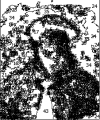
We wanted to share with you a sampling of what our growing collection of paint by number pattern sets contain. Each of the generated SegPlay® PC patterns have been created by our proprietary Segmation? imaging process which generates accurate, non-overlapping pattern line art along with a customized color palette. When these patterns are completely colored, the resulting image has a very strong resemblance to the original artwork.
Our SegPlay® PC collection is growing month by month. Each set comes with approximately 20 carefully designed patterns from a given artist or theme. These vibrant and colorful pieces of art are truly engaging and exciting for you to paint, and especially a joy to look at when completed. You'll need an authorized version of SegPlay® PC to install them (you can buy SegPlay®PC at our Kagi store).
A complete list of our growing set of SegPlay® PC computerized paint by number patterns can be found here.
If you have some suggestions about future content for SegPlay® PC (artist, theme, style, etc.) please send us an email at suggest@segmation.com
|
|||||||
Claude Monet - Founder of French Impressionism |
|||||||
|
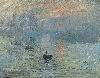
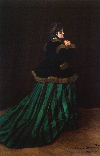
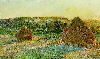
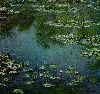
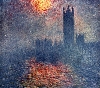
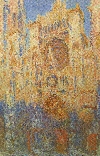
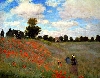
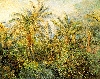
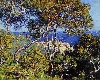
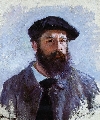
Claude Monet (1840-1926) was a founder of an artist movement known as Impressionist painting. In fact, the term Impressionism is derived from the title of one of his paintings "Impression, Sunrise" which was done in 1872. His wife's name was Camlile and she was the subject of several of his paintings ("The Woman in the Green Dress", "The Woman in the Garden", "The Red Kerchief") as was his first son Jean ("Hobby Horse"). He lived in various cities throughout his live including Paris, Normandy, London, Vétheuil, Vernon, and Giverny where many of his well-known garden scenes were painted. Our pattern set includes a vast selection of Monet's art pieces and series. You'll find many well known paintings including "Impression, Sunrise", "Woman in the Green Dress", "Houses of Parliament", "Haystacks", "Water Lilies", "Nympheas", "Rouen Cathedral", and "Bouquet of Sunflowers". There's also a self-portrait of Monet included in this large set. |
|||||||
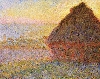
| Impression Sunrise | Woman in the Green Dress | Haystacks (sunset) | |||||
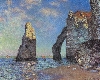
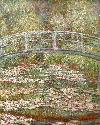
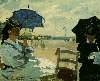
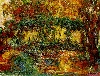
| The Cliffs at Etretat | Bridge over a Pond of Water Lilies | The Beach at Trouville | |||||
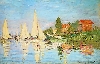
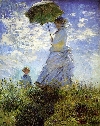
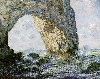
| The Regatta at Argenteuil | Woman with a Parasol | Rock Arch West of Etretat | |||||
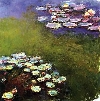
| Wheatstacks (End of Summer) | Water Lilies | Houses of Parliament-London | |||||
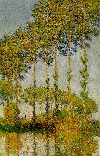
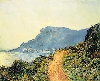
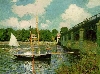
| Poplars along the River Epte | The Corniche of Monaco | The Highway Bridge at Argenteuil | |||||
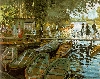
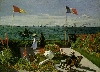
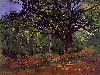
| Bathing at La Grenouillère | Garden at Sainte-Adresse | The Bodmer Oak | |||||
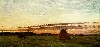
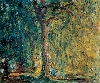
| Haystacks at Chailly at Sunrise | Irises in Monet's Garden | Weeping Willow | |||||
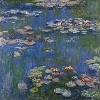
| The Japanese Bridge | Nympheas | Water Lilies | |||||
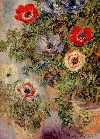
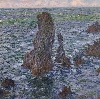
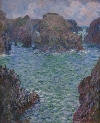
| Still-Life with Anemones | Port Coton Pyramids | Port-Goulphar Belle-Isle | |||||
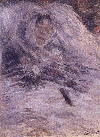
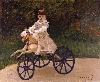
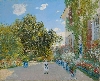
| Camille Monet on her Deathbed | Jean Monet on his Hobby Horse | The Artist's House at Argenteuil | |||||
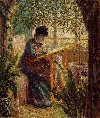
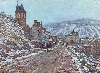
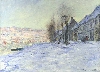
| Camille Monet at her Tapestry Loom | Street in Vétheuil in Winter | Lavacourt: Sunshine and Snow | |||||
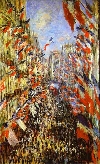
| Rue Montorgueil | Nympheas | Bouquet of Sunflowers | |||||
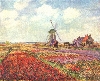
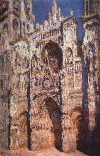
| A Field of Tulips in Holland | Rouen Cathedral-Full Sunlight | Rouen Cathedral (sunset) | |||||
| Wild Poppies | Water Lilies (The Clouds) | Garden in Bordighera | |||||
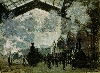
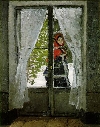
| Bordighera | Saint-Lazare Station | The Red Kerchief | |||||
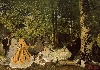
| Green Reflections | Luncheon on the Grass | Self Portrait | |||||
| This set is available at our Kagi Store and requires an authorized version of SegPlay® PC to be already installed on your machine. | |||||||
|
Claude Monet (November 14, 1840 – December 5, 1926) was one of the founders of the French Impressionist School and a leading advocate of painting outside in order to capture the fleeting influence of light. The Impressionist movement was named after one of his paintings. Monet was born in Paris, France, the second son of a grocer. The family lived in Paris until Monet was around five years old and then moved to Le Havre, a port town in Normandy, where Monet’s father had been offered a job. Young Claude was educated in Le Havre and at school his artistic abilities soon became apparent. By the time he was fifteen he was producing caricatures and portraits and in 1858 he met Eugene Boudin, a local landscape painter who recognized the young artist’s talent and who was to be an important influence on his development. It was Boudin who taught Monet how to use oil paints and pastels, but more importantly, it was Boudin who introduced Monet to painting out of doors and encouraged him to create his first landscape. Monet’s father wanted his son to run the family grocery business, but young Claude had other ideas. A trip to the Louvre in Paris in early 1859 had convinced him to pursue a career as an artist and by the winter of the same year, much against his family’s wishes, he moved to Paris and enrolled at the Academie Suisse where he learned figure drawing. In the evenings he would go to the Brasserie des Martyrs, where Parisian artists and writers met to exchange ideas and discuss the arts. But military service was to interrupt Monet’s studies: in 1861 he was drafted to serve in Algeria. He was supposed to have remained in Africa for seven years, but after two years he fell ill with typhoid fever. His aunt intervened and won him a discharge. She set only one condition in return for her help: Monet had to return to his art studies. So, in 1862 Claude Monet enrolled in the studio of Charles Gleyre in Paris. The vibrant colors and stark landscapes of Algeria had changed the way Monet saw nature. At Gleyre’s studio, Monet met Bazille, Sisley and Renoir and the four young painters exchanged new ideas and approaches to painting. The four were to become the core of the Impressionist movement. The little group became close friends and went together on painting excursions to the forest of Fontainebleau. They were all firm believers in painting out of doors and attempted to capture the sunlight and open spaces in rapid brushstrokes and fractured colors. While studying at Gleyre’s studio, Monet met his future wife, Camille Doncieux. She was the model for many of his paintings, and notably a portrait accepted at the official Salon in 1866. It was to be the last of his works exhibited at the Salon, which rejected all works by the Impressionists. Shortly afterwards Camille became pregnant and in 1867 she gave birth to their first son, Jean. Monet was short of money during those years; his paintings were not accepted and the couple had to depend on the charity of friends and family. To add to their troubles, Monet developed eyesight problems. In 1868 he even tried to commit suicide by throwing himself into the river Seine and destroyed his own paintings rather than have them confiscated by his creditors. However, a year later Monet’s financial situation improved slightly and by 1870 he was able to marry Camille Doncieux. Just one month after their wedding, the Franco-Prussian war broke out and the couple fled to London, England. The move was to be a turning point in Monet’s life. Not only was he able to study landscape paintings by Constable and Turner, but he also met the art dealer Paul Durand-Ruel who was to be crucial in organizing exhibitions of his works. In 1871 Claude and Camille Monet returned to France and settled in the village of Argenteuil near Paris where they lived till 1878 and where Monet concentrated on developing the Impressionist style. Around 1872 he painted the famous Impression, Sunrise which inspired an unsympathetic art critic to coin the term “Impressionism” to describe the movement’s style of painting when he saw it exhibited in 1874. This new style of painting was not immediately popular with the art-buying public and soon Monet was again in financial trouble. His wife Camille contracted tuberculosis in 1876 and in 1878 the family moved to Paris. Camille was pregnant again and gave birth to Michel, their second son, shortly after the move. But her weak body couldn’t cope with the stress of childbirth and she died a year later. The Impressionists split up during the 1880s, but their paintings were achieving financial success. Durand-Ruel, the art dealer who Monet had met in London, sponsored exhibitions to promote their works and in 1886 he organized the first Impressionist exhibition in the United States. After years of struggling, Monet was at last financially secure and in 1883 he moved to Giverny, where he remained until his death 43 years later. Monet grieved over Camille’s death for a long time, but eventually he set up home with Alice Hoshede, the wife of a bankrupt art patron. Alice brought her six children to the Monet household. Although Alice was separated from her husband, she waited until he died before marrying Monet in 1892. During the 1890s Monet concentrated on series painting, which included the first of the famous water lily series painted in the lovely Japanese garden he had planted at Giverny. Although he continued to work on the twelve large mural-sized canvases from 1916 until his death in 1926, he donated the paintings to France following the Armistice that ended WWI in 1918. Monet’s last years were financially secure but he was in poor health. He suffered from rheumatism and his eyesight was failing rapidly due to cataracts. By the 1920s he was almost blind and he couldn’t see color properly, but that didn’t stop him from painting. He was now in his eighties. His second wife Alice had died in 1911 and his oldest son Jean had died in 1914. Monet had an operation to remove the cataracts plaguing his eyesight, which enabled him to complete the great water lily series before his death in 1926. |
|||||||
|
You may reproduce this article only in its whole and only by including this copyright. If reproducing it electronically, you must include a link to www.segmation.com. |
|||||||