
SegPlay® PC Pattern Set Contentssegmation paintmark


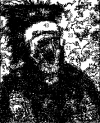
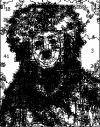
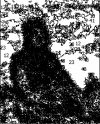
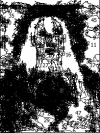
We wanted to share with you a sampling of what our growing collection of paint by number pattern sets contain. Each of the generated SegPlay® PC patterns have been created by our proprietary Segmation? imaging process which generates accurate, non-overlapping pattern line art along with a customized color palette. When these patterns are completely colored, the resulting image has a very strong resemblance to the original artwork.

Our SegPlay® PC collection is growing month by month. Each set comes with approximately 20 carefully designed patterns from a given artist or theme. These vibrant and colorful pieces of art are truly engaging and exciting for you to paint, and especially a joy to look at when completed. You'll need an authorized version of SegPlay® PC to install them (you can buy SegPlay®PC at our Kagi store).

Segmation Store Buy Now

A complete list of our growing set of SegPlay® PC computerized paint by number patterns can be found here.

If you have some suggestions about future content for SegPlay® PC (artist, theme, style, etc.) please send us an email at suggest@segmation.com


George Catlin - Painter of American Indians

George Catlin - Painter of American Indians

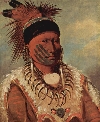
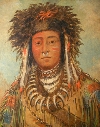
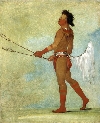
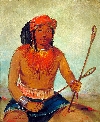
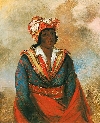
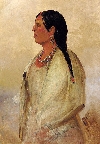
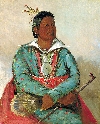
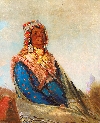
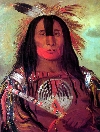
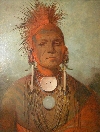
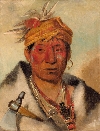
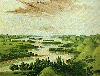
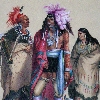
George Catlin (1796-1872) was an American painter who traveled throughout the Americas and painted many portraits of American Indians. At the beginning of his career after a stint as a lawyer, he traveled with William Clark into Native American territory. He eventually visited up to 50 different tribes at a time when they were untouched by European civilization. His lifetime collection of art works total over 500 accompanied by over 700 sketches. Our collection of patterns contains a great many of his portraits of male and female Indian chiefs, warriors, braves, medicine men, and ball players. There are also patterns with buffalos, horses, and a river landscape.

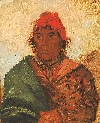
thumbnail1 thumbnail1             thumbnail1 thumbnail1             thumbnail1 thumbnail1
The White Cloud             Boy Chief             In Ball Player's Dress
 
 
thumbnail1 thumbnail1             thumbnail1 thumbnail1             thumbnail1 thumbnail1
Drinks the Juice of the Stone             Seminole Chief             Snapping Turtle
 
 
thumbnail1 thumbnail1             thumbnail1 thumbnail1             thumbnail1 thumbnail1
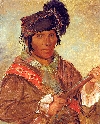
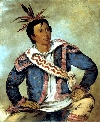
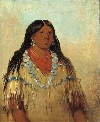
How Did He Kill?             A Choctaw Woman             Chief of the Tribe - Choctaw
 
 
thumbnail1 thumbnail1             thumbnail1 thumbnail1             thumbnail1 thumbnail1
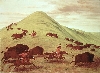
Sam Perryman             Sioux Indians Hunting Buffalo             Buffalo Bill's Back Fat
 
 
thumbnail1 thumbnail1             thumbnail1 thumbnail1             thumbnail1 thumbnail1
Iowa Medicine Man             A Warrier             Creek-Muskogee Brave
 
 
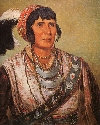
thumbnail1 thumbnail1             thumbnail1 thumbnail1             thumbnail1 thumbnail1
King Phillip - Second Chief             Osceola             Taming Wild Horses

 
 
thumbnail1 thumbnail1             thumbnail1 thumbnail1             thumbnail1 thumbnail1
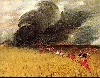
Dying Buffalo             View from above Floyd's Grave             Prairie Meadow Burning
 
 
thumbnail1 thumbnail1             thumbnail1 thumbnail1             thumbnail1 thumbnail1
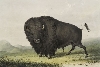
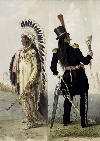
North American Indians             Buffalo Bull Grazing             Win-Jun-Jon Assiniboine Chief
 
 
This set is available at our Kagi Store and requires an authorized version of SegPlay® PC to be already installed on your machine.

George Catlin (July 26, 1796 – December 23, 1872) was an American artist and author who travelled the Wild West and painted Native Americans. His paintings and books recorded their appearance, customs and culture.

Catlin was born in Wilkes-Barre, Pennsylvania, the fifth of fourteen brothers and sisters. His father was a lawyer who wanted his son to follow in his footsteps, and in 1817 sent him to study law in Litchfield, Connecticut. But Catlin was more interested in art than law and, after practicing for a couple of years moved to Philadelphia where he began painting portraits. Catlin never formally studied art; he was entirely self-taught but still won commissions, including a request to paint the portrait of Governor DeWitt Clinton of Albany, N.Y.. It was on one of his visits to the Governor’s mansion he met his future wife, Clara Bartlett Gregory. The couple were married in 1828 and had three daughters and a son.

In 1830 Catlin set out on his great quest to record the Native American way of life. For the next eight years he traveled up the Mississippi and Missouri rivers and painted Native American tribes at the borders of the great frontier. Painting under harsh conditions, his portraits faithfully recorded the rituals, dress, dances and hunting skills of tribes like the Sioux, Cree, Omaha, Blackfeet and Pawnee. His renderings were so faithful that ornaments, beads and headdresses worn by his subjects were reproduced down to the smallest detail. He took written notes and made frequent sketches. By the end of this first journey, he had produced 520 oil paintings and had amassed an important collection of Native American artifacts.

Catlin returned to the east coast in 1837 where he gathered together his paintings, sketches, artifacts and costumes into a traveling show he called his “Indian Gallery”. He took the show to New York, Cincinnati and Pittsburgh, giving lectures and telling stories of his life among the Indian tribes. He also went to Washington where he hoped to sell the Indian Gallery to the United States government; his life’s ambition was to have the works become part of a museum collection. But Congress did not approve the purchase and the exhibition did not do well in Boston and Philadelphia. The second show in New York also had poor attendance.

Following these disappointments, Catlin decided to take the Indian Gallery to Europe and in 1839 set sail for England. The exhibition opened in London in 1840 with much publicity. Catlin gave lectures and demonstrations of Native American hunting practices. In addition to the splendid portraits, visitors to the exhibition could view weapons and costumes – there were even live performances by Native American dancers. The show was a huge success and Catlin’s family came over to join him in London. In 1845, Catlin took the Indian Gallery to Paris, where his wife and son both died.

Catlin stayed on in Europe after his wife’s death, living there until 1852 when bankruptcy forced him to hand over the Indian Gallery to Joseph Harrison, a Philadelphia businessman. Harrison stored the works in his factory in Philadelphia and Catlin spent the next 20 years trying to recreate the Indian Gallery from his notes and sketches.

Following his bankruptcy, Catlin went back to his roots, returning to the USA and traveling to South America where he spent the next six years traveling and painting the Indian peoples. He traveled up America’s Pacific coast all the way up to Alaska. In 1860 Catlin returned to Brussels, Belgium, where he lived for ten years before returning to New York in 1870 where he died in 1872. After his death, Joseph Harrison’s widow donated the Indian Gallery to the Smithsonian Institution.


Copyright (C) 2008 Segmation.com. All rights reserved.

You may reproduce this article only in its whole and only by including this copyright. If reproducing it electronically, you must include a link to www.segmation.com.