
SegPlay® PC Pattern Set Contentssegmation paintmark


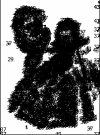
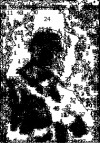
We wanted to share with you a sampling of what our growing collection of paint by number pattern sets contain. Each of the generated SegPlay® PC patterns have been created by our proprietary Segmation? imaging process which generates accurate, non-overlapping pattern line art along with a customized color palette. When these patterns are completely colored, the resulting image has a very strong resemblance to the original artwork.

Our SegPlay® PC collection is growing month by month. Each set comes with approximately 20 carefully designed patterns from a given artist or theme. These vibrant and colorful pieces of art are truly engaging and exciting for you to paint, and especially a joy to look at when completed. You'll need an authorized version of SegPlay® PC to install them (you can buy SegPlay®PC at our Kagi store).

Segmation Store Buy Now

A complete list of our growing set of SegPlay® PC computerized paint by number patterns can be found here.

If you have some suggestions about future content for SegPlay® PC (artist, theme, style, etc.) please send us an email at suggest@segmation.com


Frans Hals - Dutch Portrait Painter

Frans Hals - Dutch Portrait Painter

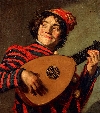
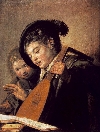
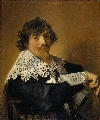
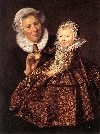
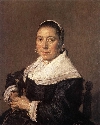
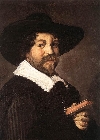
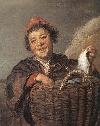
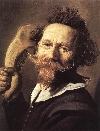
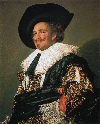
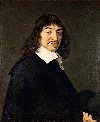
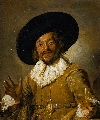
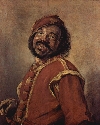
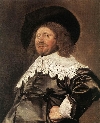
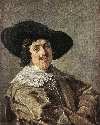
Frans Hals (1580-1666) was a Dutch Golden Age painter who is best known for his many portrait paintings. His style is noted for a loose brush style and also helped evolve the 17th century group portraiture. He lived most of his life in the city of Haarlem, where his talents for painting were greatly in demand, particularly by wealthy citizens. Our collection of patterns contains many of his most recognizable paintings including "Jester with a Lute", "Portrait of René Descartes", "Pieter van dem Broecke", "Malle Babbe", "Marriage Portrait of Isaac Massa", "Two Boys Singing", and "The Laughing Cavalier".

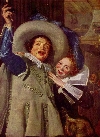
thumbnail1 thumbnail1             thumbnail1 thumbnail1             thumbnail1 thumbnail1
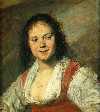
Jester with a Lute             Gypsy Girl             The Laughing Cavalier
 
 
thumbnail1 thumbnail1             thumbnail1 thumbnail1             thumbnail1 thumbnail1
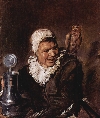
Malle Babbe             Portrait of a Man             Portrait of a Woman
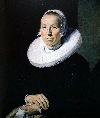
 
 
thumbnail1 thumbnail1             thumbnail1 thumbnail1             thumbnail1 thumbnail1
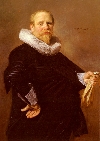
Singing Boy with a Flute             Pieter van den Broecke             Willem Coymans
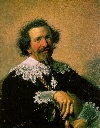
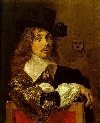
 
 
thumbnail1 thumbnail1             thumbnail1 thumbnail1             thumbnail1 thumbnail1
Two Boys Singing             Portrait of a Man Holding a Skull             Young Man with a Skull
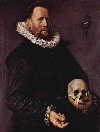
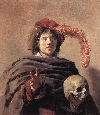
 
 
thumbnail1 thumbnail1             thumbnail1 thumbnail1             thumbnail1 thumbnail1
Jonker Ramp and his Sweetheart             Portrait of René Descartes             Pekelharing
 
 
thumbnail1 thumbnail1             thumbnail1 thumbnail1             thumbnail1 thumbnail1
Portrait of Pieter Jacobsz Olycan             The Jolly Drinker             Der Mulatte
 
 
thumbnail1 thumbnail1             thumbnail1 thumbnail1             thumbnail1 thumbnail1
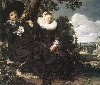
Marriage Portrait of Isaac Massa             The Rommel Pot Player             Shrovetide Revellers
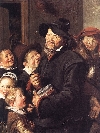
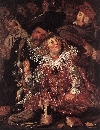
 
 
thumbnail1 thumbnail1             thumbnail1 thumbnail1             thumbnail1 thumbnail1
Portrait of a Man             Boy Playing a Violin             Portrait of a Man
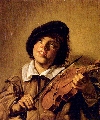
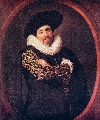
 
 
thumbnail1 thumbnail1             thumbnail1 thumbnail1             thumbnail1 thumbnail1
Catharina Hooft with her Nurse             Frans Post             The Painter Jan Asselyn
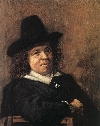
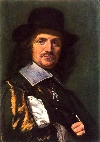
 
 
thumbnail1 thumbnail1             thumbnail1 thumbnail1             thumbnail1 thumbnail1
Portrait of a Seated Woman             Johannes Hoornbeeck             Portrait of a Standing Woman
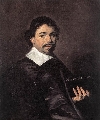
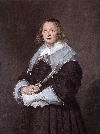
 
 
thumbnail1 thumbnail1             thumbnail1 thumbnail1             thumbnail1 thumbnail1
Portrait of a Man Holding a Book             Claes Duyst van Voorhout             Portrait of a Man
 
 
thumbnail1 thumbnail1             thumbnail1 thumbnail1             thumbnail1 thumbnail1
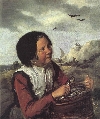
Fisher Boy             Fisher Girl             Verdonck
 
 
thumbnail1 thumbnail1                                
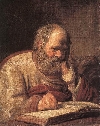
St. Luke                            
 
 
This set is available at our Kagi Store and requires an authorized version of SegPlay® PC to be already installed on your machine.

Frans Hals (c. 1580 - August 26, 1666) was a master portrait painter and one of the most gifted artists of the 17th century Dutch school. His fresh, lively approach influenced the way future artists handled large-scale group portraits.

Not much is known about the life of Frans Hals. He was born in Antwerp sometime around 1580-1581 to a Dutch family living in Flanders. His father was a draper, and the family fled the city when it was conquered by Spain in 1585, moving to Haarlem in Holland where Frans Hals would spend the rest of his life.

Hals studied painting from 1601-1603 under Karel van Mander, who had fled Antwerp at the same time as the Hals family, and in 1610, was admitted to the Haarlem painters' guild. He started working for the city as an art restorer and in the same year, married his first wife, Annetje Harmansdr. The couple had two sons, but Annetje died during the birth of their second son.

The paintings Hals produced before the age of 30 are unknown, but his first important commission was painted in 1616: a life-sized group portrait known as The Banquet of the Officers of the St George Militia Company. This work led to other, similar commissions throughout the 1620s and 30s, which are among the artist's finest productions. He was at the height of his artistic popularity during those years.

Hals was doing well and in 1617 he remarried. His second wife, Lysbeth Reyniers, had been hired as nanny for his two children. It is rumored she was eight months pregnant when they married and the couple went on to have eight children together. In fact, Frans Hals was a lively character with the reputation of being a womanizer who liked to have a good time. That might have been one of the reasons why, despite his success as an artist, he was always short of money.

The paintings produced in the 1630's tend towards simple compositions and bright colors. These give way to cooler tones and by the 1640s a dramatic change can be seen in Hals's works. His brushwork was bold and free and the colors became monochromatic tones of blacks and greys. His most important work of this period is the 1648 portrait of René Descartes.

Although Hals was elected chairman of the Haarlem painters' guild in 1644, his manner of painting was starting to go out of style and he was losing customers. With a large family to support, Hals changed his style in a bid to remain popular, but to little effect. He worked as an art dealer, and acted as art tax expert for the municipality. In 1652 he was taken to court and declared bankrupt. He had to sell his belongings and was left destitute, relying on a stipend from the Haarlem municipality to survive.

When he was 84 years old, Hals painted two of his greatest works, Lady Regents of the Almshouse and The Governors of the Almshouse, considered to be among the greatest portrait works ever painted.


Copyright (C) 2008 Segmation.com. All rights reserved.

You may reproduce this article only in its whole and only by including this copyright. If reproducing it electronically, you must include a link to www.segmation.com.