
SegPlay® PC Pattern Set Contentssegmation paintmark


We wanted to share with you a sampling of what our growing collection of paint by number pattern sets contain. Each of the generated SegPlay® PC patterns have been created by our proprietary Segmation? imaging process which generates accurate, non-overlapping pattern line art along with a customized color palette. When these patterns are completely colored, the resulting image has a very strong resemblance to the original artwork.

Our SegPlay® PC collection is growing month by month. Each set comes with approximately 20 carefully designed patterns from a given artist or theme. These vibrant and colorful pieces of art are truly engaging and exciting for you to paint, and especially a joy to look at when completed. You'll need an authorized version of SegPlay® PC to install them (you can buy SegPlay®PC at our Kagi store).

Segmation Store Buy Now

A complete list of our growing set of SegPlay® PC computerized paint by number patterns can be found here.

If you have some suggestions about future content for SegPlay® PC (artist, theme, style, etc.) please send us an email at suggest@segmation.com


Berthe Morisot - Female Impressionist

Berthe Morisot - Female Impressionist

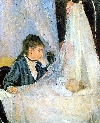
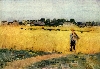
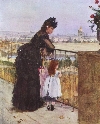
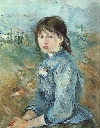
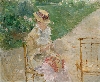
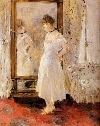
Berthe Morisot was a 19th century French painter in a talented group known as the Impressionists. She had a close acquaintance with Édouard Manet, another well-known impressionist painter, and married his brother, Eugene. Their daughter, Julie, became the subject of many of Berthe's paintings. Probably because she was female, her work was undervalued for over a century. She is now considered among the most elite of the impressionists. Our SegPlayPC set contains 30 of her best works, which demonstrate her focus on the intimacy of family and domestic life. We've included "The Cradle", "Grain Field", "The Harbor at Lorient", "Chasing Butterflies", "Summer Day", "Young Girl with Cage", "The Cheval Glass", "The Dining Room", "Mother and Sister of the Artist Reading" and "Woman at her Toilet".

thumbnail1 thumbnail1             thumbnail1 thumbnail1             thumbnail1 thumbnail1
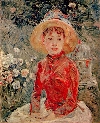
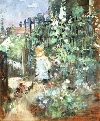
The Cradle             Grain Field             Child among Staked Roses
 
 
thumbnail1 thumbnail1             thumbnail1 thumbnail1             thumbnail1 thumbnail1
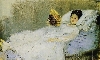
Young Girl with Cage             Reading             The Mother and Sister of the Artist (Reading)

 
 
thumbnail1 thumbnail1             thumbnail1 thumbnail1             thumbnail1 thumbnail1
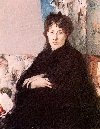
Portrait of Edma Pontillon             Chasing Butterflies             Portrait of Madame Hubbard

 
 
thumbnail1 thumbnail1             thumbnail1 thumbnail1             thumbnail1 thumbnail1
On the Balcony             The Harbor at Lorient             Hide and Seek

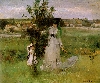
 
 
thumbnail1 thumbnail1             thumbnail1 thumbnail1             thumbnail1 thumbnail1
Young Girl with a Parrot             Peasant Hanging out the Washing             The Bath (Girl Arranging her Hair)

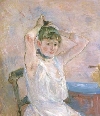
 
 
thumbnail1 thumbnail1             thumbnail1 thumbnail1             thumbnail1 thumbnail1
At the Ball             Summer Day             The Dining Room
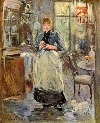
 
 
thumbnail1 thumbnail1             thumbnail1 thumbnail1             thumbnail1 thumbnail1
The Artist's Daughter with a Parakeet             Woman at her Toilet             Woman with a Muff
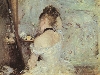
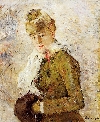
 
 
thumbnail1 thumbnail1             thumbnail1 thumbnail1             thumbnail1 thumbnail1
Julie Manet and Her Greyhound Laertes             Rose Trémière             Portrait of Edma
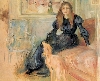
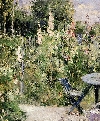
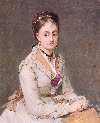
 
 
thumbnail1 thumbnail1             thumbnail1 thumbnail1             thumbnail1 thumbnail1
Young Woman Seated on a Sofa             Young Woman Knitting             Little Girl with a Doll

 
 
thumbnail1 thumbnail1             thumbnail1 thumbnail1             thumbnail1 thumbnail1
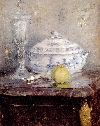
The Little Girl from Nice             The Cheval Glass             Tureen and Apple
 
 
This set is available at our Kagi Store and requires an authorized version of SegPlay® PC to be already installed on your machine.

Berthe Morisot (January 14, 1841 – March 2, 1895) was the first woman French Impressionist painter and was known for her loose brushwork and revolutionary use of color in a variety of media. Together with Mary Cassat, she is considered to be one of the most important female artists of the period and her paintings are rated among the leading works of Impressionism.

Berthe Morisot was born in the town of Bourges, France into a family that was wealthy, cultured and, above all firmly rooted in the arts. She was the granddaughter of Fragonard, the famous French Rococco painter. Her father was a high-ranking civil servant and the family actively developed the education of their daughters by bringing them private tutors for literature, languages and painting.

Berthe and her sister Edma, who had begun painting and drawing as young girls, soon became accomplished artists and regularly copied masterpieces at the Louvre after the family moved to Paris in 1852. Jean-Baptiste Camille Corot was one of the art tutors of the Morisot sisters and he encouraged the girls to paint out of doors. Corot’s light-filled landscapes were later to be one of the main influences on the Impressionist movement.

Morisot had befriended painter Henri Fantin-Latour and through him came to know Edouard Manet in 1868. It was to be a friendship that would change her life, for not only did Manet introduce Morisot to the circle of Parisian Impressionist painters but in 1874, when she was 33 years old, Berthe married Manet’s younger brother, Eugene. The couple had one daughter, Julie.

Manet and Morisot had a tremendous influence on each other. The two artists regularly exchanged ideas about art and posed for each other’s paintings. Indeed, she appears in eleven of Manet’s paintings, including a striking portrait of Morisot dressed in black after she was widowed. Under Manet’s influence, Morisot distanced herself from Corot’s style and adopted a freer approach to form and color.

Although marriage gave Morisot the social stability women in those days needed, she did not stop painting as her sister Edma had done. By 1874 she was a well-established member of the Impressionists. Although as a woman she was not able to participate in the café discussions on art, the group declared that her paintings, with their light daubs of pure color and unfinished backgrounds, embodied the spirit of Impressionism. She was good friends with Degas and Bazille and, in 1874 she shunned the official Salon and agreed, instead, to join her fellow Impressionists at their first independent exhibition, the “Salon des Refusés” (the Salon of the Rejected). There, Morisot showed paintings drawing on her domestic life, such as The Cradle and Reading as well as some impressionistic landscapes like The Harbor at Cherbourg.

Eugene Manet died in 1892, leaving Berthe a rather young and heartbroken widow. She confided her feelings to her daughter Julie who became her constant companion and even painted alongside her mother, like Edma had done in the past.

Berthe Morisot died of pneumonia in 1895. She was 54 years old. Her first solo exhibition had taken place a few years earlier in 1892. In her lifetime she thought her work had no importance, but after her mother’s death, Julie took care of promoting Morisot’s works by lending them out to exhibitions, starting with a huge memorial exhibition of 300 works in Paris in 1895, and ensuring that Morisot’ contribution to the Impressionist movement would achieve the recognition it deserved.


Copyright (C) 2008 Segmation.com. All rights reserved.

You may reproduce this article only in its whole and only by including this copyright. If reproducing it electronically, you must include a link to www.segmation.com.